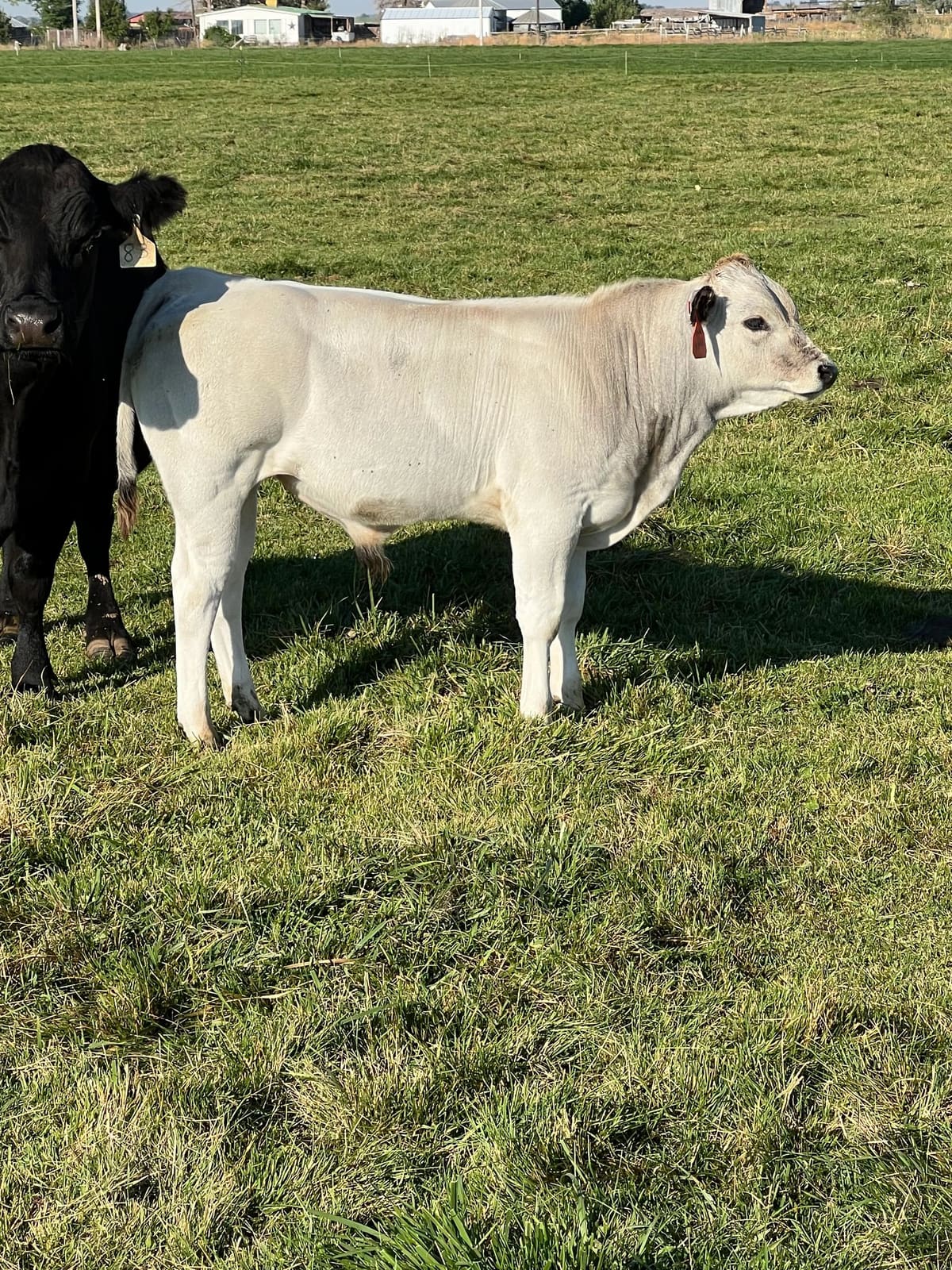
Comparison
Piedmontese vs Angus — same pasture-raised claim, different genetics.
Black Angus is the default American beef breed. It's the breed behind most of the pasture-raised boxes you've seen. Piedmontese is what you reach for when you want pasture-raised beef that's leaner, higher in protein, and more tender — without giving up the same pasture story.
Two breeds, two starting points
Black Angus is the workhorse of American beef. It dominates feedlots, it dominates grocery-store cases, and it dominates the pasture-raised premium tier too. That popularity is well-earned — Angus is hardy, calves easily, marbles consistently when fed grain, and finishes reliably on grass when given enough time. It's the breed that built the modern American beef industry.
Piedmontese starts from a different place. Where Angus was selected over generations to deposit fat into muscle (the marbling that drove its popularity), Piedmontese carries the natural myostatin mutation that pushes growth in the opposite direction — into muscle mass, away from fat. The breed never went through a feedlot-friendly breeding program, and it didn't need to; it's tender by genetics.
On the same pasture, eating the same grass, the two breeds produce very different beef. Angus arrives at your plate with familiar marbling and a beef-fat richness. Piedmontese arrives leaner, with denser protein and a tenderness that doesn't depend on intramuscular fat to deliver it.
By the numbers
| Trait | Piedmontese | Angus (pasture-raised) |
|---|---|---|
| Marbling | Light — fine, scattered flecks | Moderate — visible streaks throughout muscle |
| Intramuscular fat | ~3–5% of muscle | ~7–10% of muscle (pasture-raised) |
| Protein per 4 oz | ~26–28 g | ~22–24 g |
| Tenderness (Warner-Bratzler shear) | Lower force required — finer fiber structure | Standard reference — what most beef science uses as the baseline |
| Calving rate | Comparable to Angus on a smaller-frame, well-managed herd | Industry gold standard — easy calving, high survival |
| Climate adaptability | Italian alpine origin; thrives in temperate-cool climates like the Magic Valley | Scottish origin; well-adapted to almost any North American climate |
Numbers above are typical ranges from breed associations and pasture-raised beef nutrition databases. Spring Lake Cattle's specific values will be verified with our own lab analysis ahead of launch.
When to choose Piedmontese over Angus
-
Lean-eating households
If you're tracking macros, eating for athletic recovery, or watching saturated fat for cardiovascular reasons, Piedmontese gives you more of what you want (protein, iron, B12) and less of what you're trying to limit (fat). Same flavor profile as a good pasture-raised Angus, leaner finish.
-
When tenderness matters more than richness
Pasture-raised Angus can be chewier than its grain-fed cousin — that's the trade-off most pasture-raised shoppers know about. Piedmontese short-circuits that trade-off entirely. Genetic tenderness means a pasture-raised steak that's still soft to bite through, no compromise required.
-
Cooking for a crowd of mixed eaters
Family with someone watching cholesterol, someone who wants everything well-done, someone who hates fatty bites. A leaner breed cooks more forgivingly, doesn't punish well-done as harshly, and doesn't leave fatty rims that picky eaters cut off.
-
Trying something different that still feels like beef
Wagyu is a different category entirely. Piedmontese is still beef — the same flavor language as Angus, just with the dial turned toward muscle and away from fat. If Angus is your baseline, this is the natural next step, not a leap into the unknown.
When Angus wins
-
When you want that classic American beef-fat flavor
Some recipes — a thick steakhouse ribeye, a slow-smoked brisket, a Sunday pot roast — lean on the rendered fat to do half the cooking. Angus's heavier marbling is built for those preparations. Piedmontese will work, but you'll miss the fat-driven richness that's the whole point.
-
Long, low cooks where fat carries the day
14-hour briskets, all-day chuck-roll smokes, BBQ where the rendered fat is the entire texture story — Angus is purpose-built for that. Piedmontese can be braised beautifully, but for low-and-slow pit cooking, more marbling is genuinely better.
-
Buying at scale on a tight budget
Angus is everywhere. Bulk pasture-raised Angus at Costco or a local feedlot will always come in cheaper per pound than a rare-breed like Piedmontese. If volume and price are the deciding factors, Angus wins on availability alone.