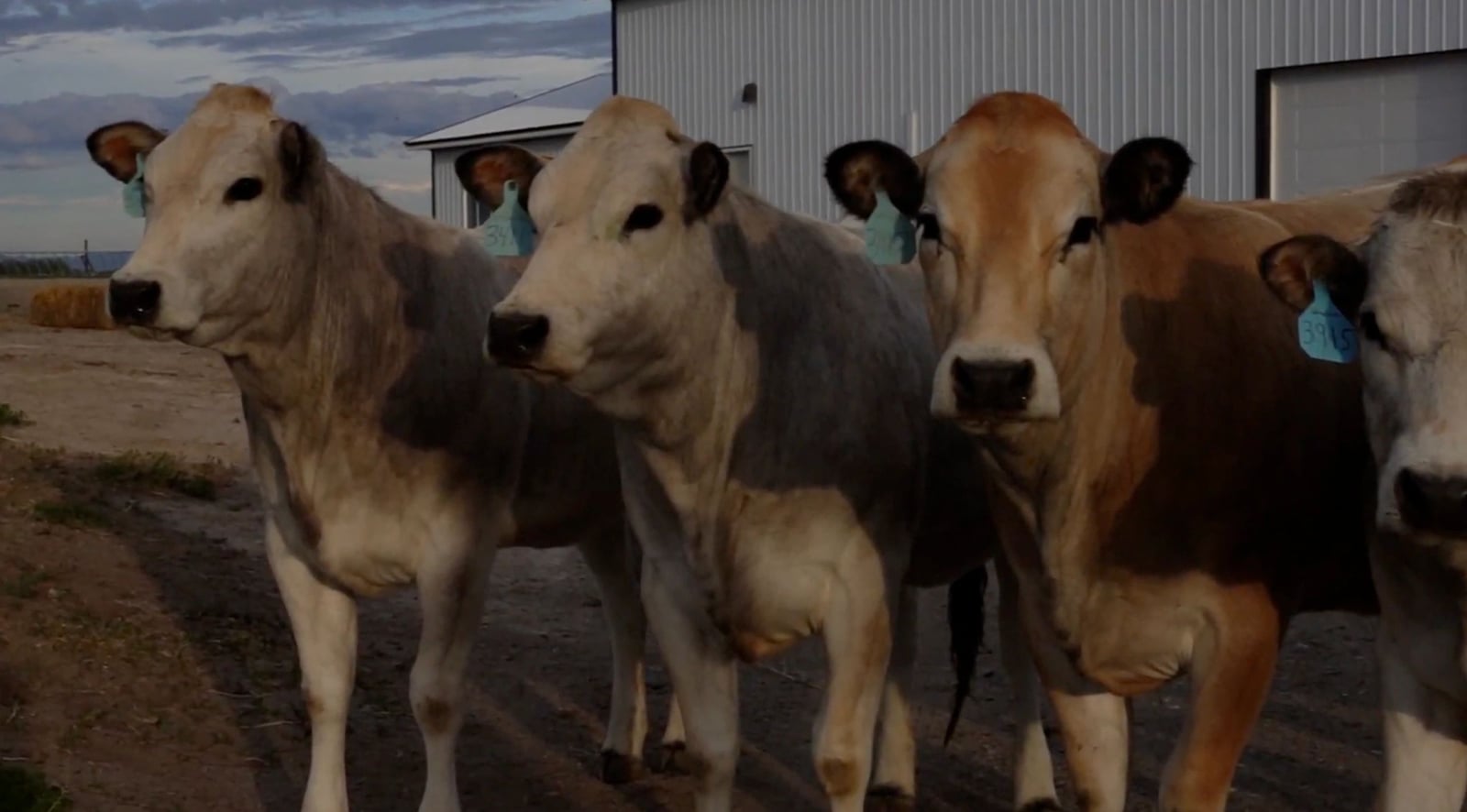
The herd
Meet the Piedmontese — a rare breed in North America.
Italian by origin, naturally double-muscled, and almost impossible to find on a supermarket shelf. Here's why we like them so much.
An old breed from the Piedmont region of Italy
Piedmontese cattle take their name from Piemonte — the region in northwestern Italy that sits at the foot of the Alps, on the French and Swiss borders. The breed has been worked there for centuries, originally as a dual-purpose animal that pulled carts, gave milk, and put meat on Sunday tables.
Sometime around the late 1800s, Italian breeders noticed a handful of animals that looked dramatically more muscular than the rest of the herd. Instead of culling them, they bred for the trait. That decision turned a regional working cow into one of the most distinctive beef breeds in Europe — and the reason your ribeye from us looks the way it does.
Piedmontese didn't reach North America until the 1980s, and even today there are only a few thousand registered head on the entire continent. That's not a marketing flourish — it's just how the math works. You will not stumble onto Piedmontese beef at Costco.
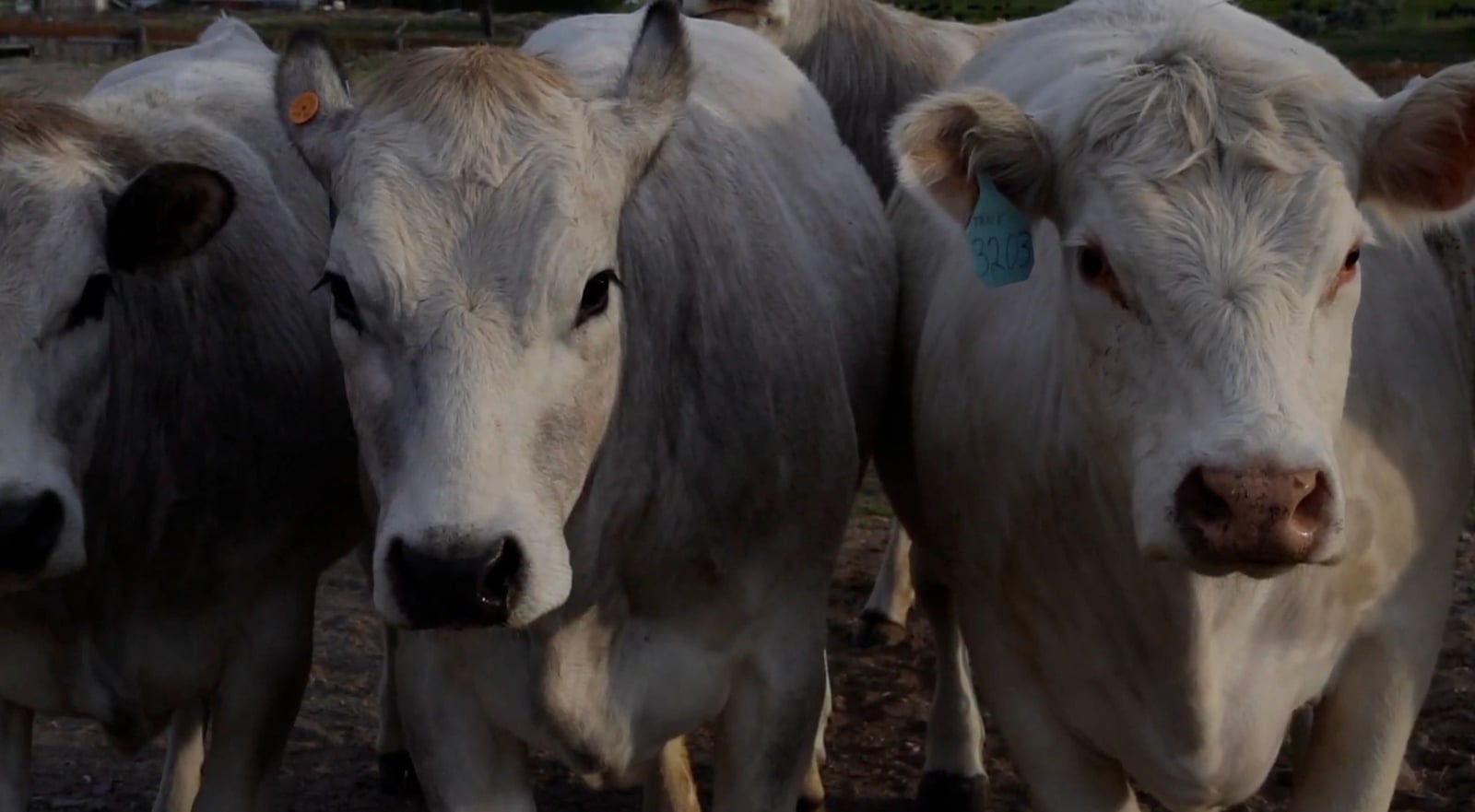
The myostatin advantage
One small genetic mutation is doing most of the work.
Myostatin is a protein every mammal produces that tells muscle to stop growing once it's reached a normal size. Piedmontese cattle carry a natural mutation that quietly turns that signal down. The result: more lean muscle, less intramuscular fat, and cuts that look impossibly clean for a beef animal.
This isn't an injection, a hormone, or a lab trick. It's a genetic quirk that's been in the breed for over a hundred years, long before anyone had the science to explain it. The Italian ranchers who bred for it just knew which calves looked right.
For your kitchen, the myostatin advantage shows up three ways: leaner cuts that hold their shape in the pan, ground beef that browns instead of swimming in fat, and steaks that are unusually tender for how lean they cook up.
Piedmontese by the numbers
Breed averages — your specific cut may vary by aging and trim.
Less than chicken breast
Fat content
Per-gram, on a comparable lean cut
High, lean protein
Protein density
More edible protein per pound than typical commodity beef
Strong and steady
Calving success
Piedmontese calve well despite the muscle
1,300–1,500 lbs
Avg. finished weight
Pasture-raised on Magic Valley grass
Numbers reflect Piedmontese breed standards.
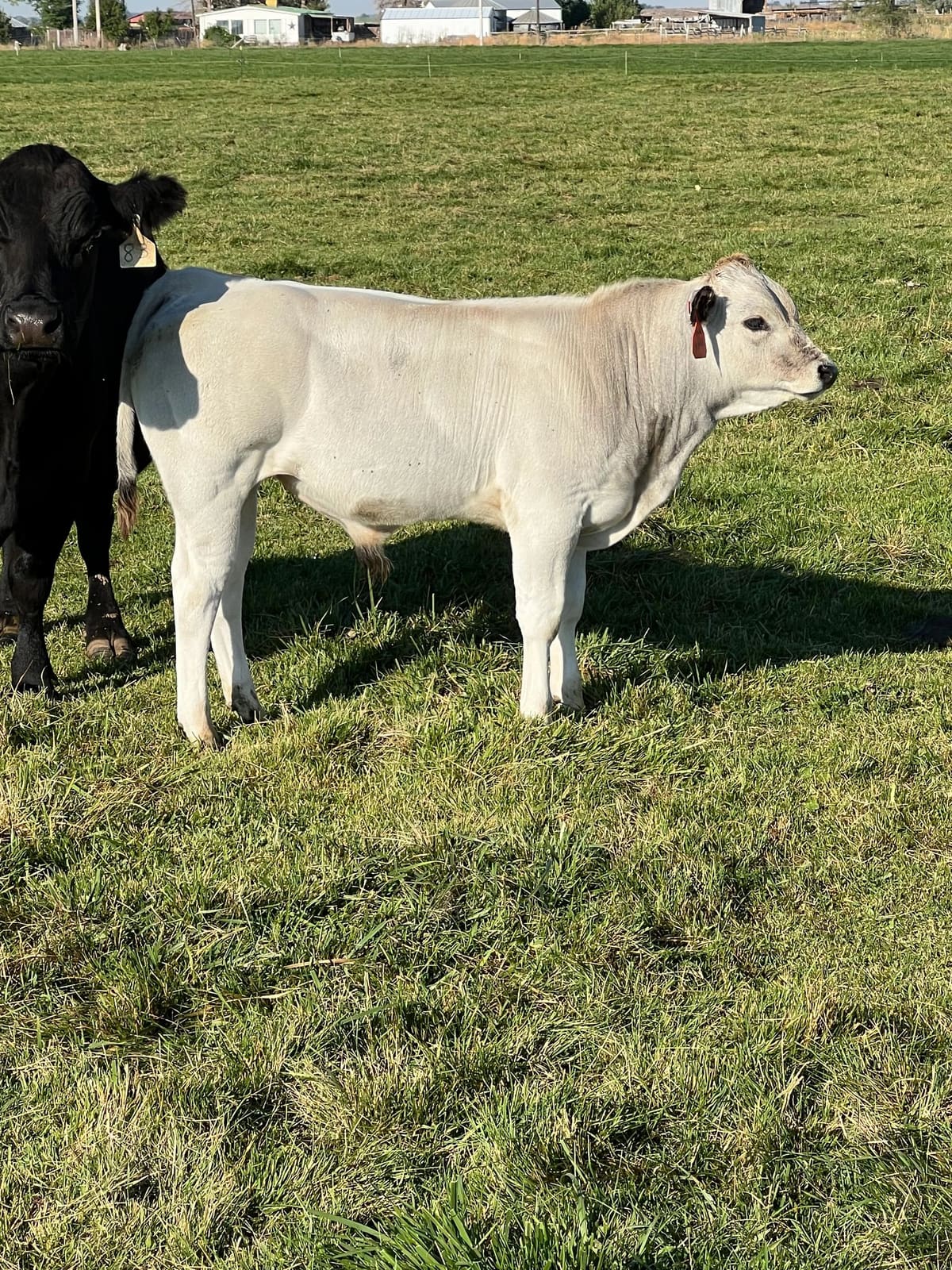
Our herd today
Our working herd at Spring Lake is small on purpose. We run a tight set of mother cows, a couple of bulls, and the year's calves coming up behind them. Names rotate as new calves are born and older animals retire — but everyone on the ranch can tell you who's who, who's bred, and who's about to drop a calf.
The animals are on open Magic Valley pasture spring, summer, and fall. In winter they come into our family's own pens — not a commercial feedlot, just our ranch — where they're fed hay we cut ourselves and finished honestly until harvest. If you want to know who raised the steak you're eating tonight, that's a real question we can answer. Email us the cut and the pickup date, and we'll tell you the dam, the sire, and the pasture they came off of.
Why Piedmontese — and not Angus or Hereford?
Angus and Hereford are great breeds. They built the American beef industry, they finish well on a wide range of feed, and there's a reason they're on every grocery label. We aren't trying to compete with them on volume — we'd lose that fight every day of the week.
What Piedmontese gives us is something the big breeds can't: cuts that are naturally lean enough to satisfy a customer who's been told for thirty years to eat less red meat. With Angus, leanness comes from trimming. With Piedmontese, it's how the animal grows. The trim is already on the bone.
For a small ranch trying to sell direct, that's a real edge. People who'd quietly stopped buying beef are buying it again — not because we marketed harder, but because the breed does the work for us.
More on the breed
Go deeper on the myostatin genetics that make Piedmontese unique, see the per-100g nutrition breakdown, or compare it head-to-head with Angus and Wagyu.
Sources & further reading
Breed claims and herd-management practices on this page are drawn from peer-reviewed and breeder-association sources. Specific stats marked for partner verification before launch.
- North American Piedmontese Association (NAPA) — breed registry + breeder directory.
- ScienceDirect — Piedmontese — peer-reviewed entry on double-muscling, carcass yield, tenderness.
- Wikipedia — Piedmontese cattle — general reference with USDA Meat Animal Research Center cross-citations.