Comparison
Piedmontese vs Wagyu — same destination, opposite paths.
Both breeds are famous for tenderness. They reach it from opposite directions — one through fat, one through muscle structure. Here's how they actually compare on the cutting board.
Two breeds, two philosophies
Wagyu — the Japanese black cattle breed most people picture when they hear "premium beef" — earns its tenderness through fat. Decades of breeding selected for cattle whose bodies deposit intramuscular fat (marbling) at extraordinary rates. When you slice a Wagyu ribeye, the white veins running through the muscle aren't an accident; they're the entire product. As that fat melts on the heat, it lubricates the muscle fibers, and the steak feels almost spreadable.
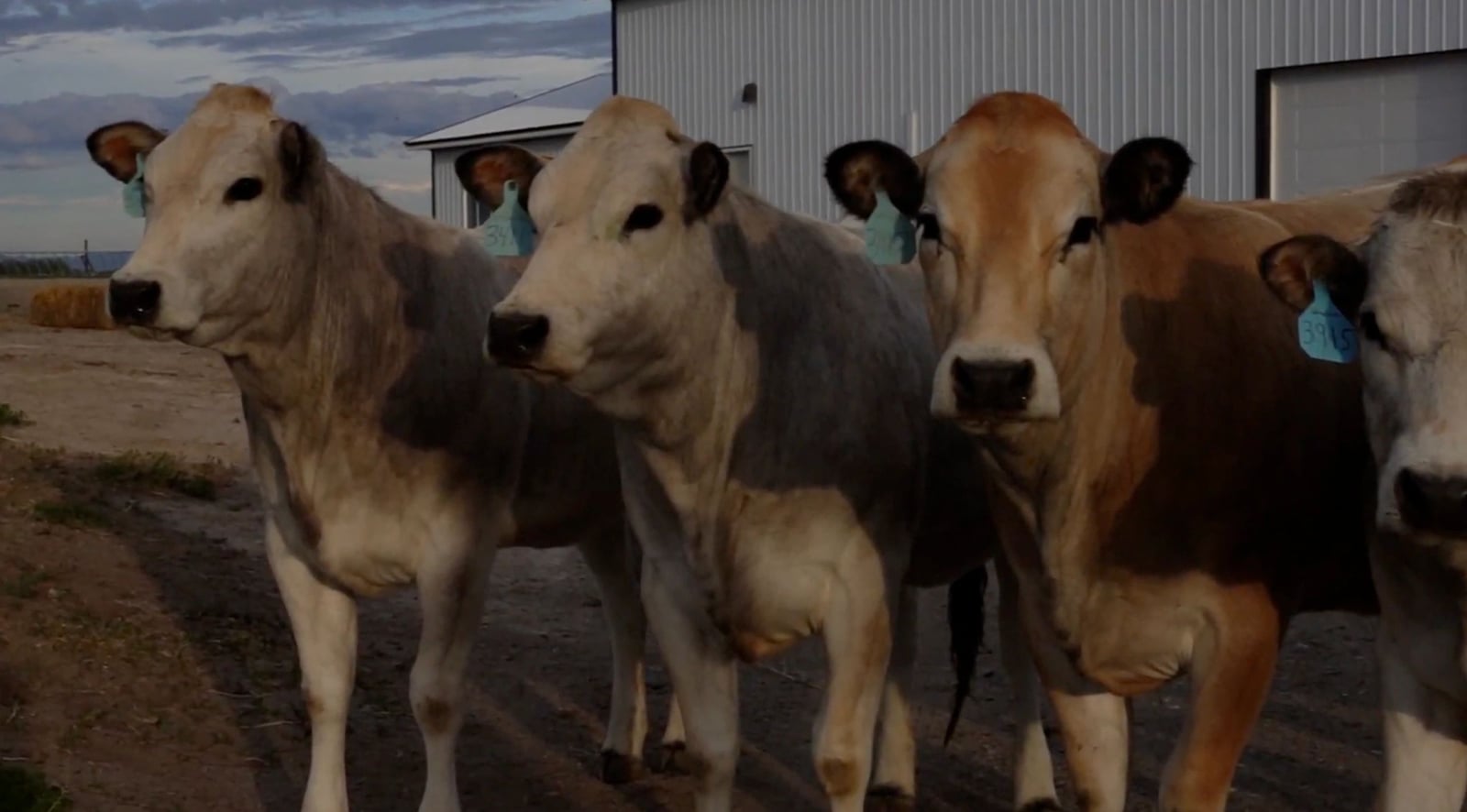
Piedmontese earns its tenderness through genetics on the muscle side instead. The natural myostatin mutation produces muscle fibers that are physically finer than ordinary beef — measured under a microscope. Less fat, sometimes a third or less of what Wagyu carries, but the meat itself is structurally softer to bite through. Same destination (a tender steak), opposite path.
One isn't better than the other — they're different products. Wagyu is a luxury indulgence; Piedmontese is a high-protein everyday red meat that happens to also be remarkably tender. Knowing which one you want depends on the meal, the budget, and how much fat you're looking for in the first place.
By the numbers
| Trait | Piedmontese | Wagyu |
|---|---|---|
| Marbling | Minimal — fine, scattered flecks | Extreme — dense web of fat throughout |
| Intramuscular fat | ~3–5% of muscle | ~25–35% of muscle |
| Protein per 4 oz | ~26–28 g | ~18–20 g |
| Cooking style | Hot & fast; pull early — less fat, less margin for error | Lower heat, smaller portions; let the fat carry the cook |
| Price tier | Premium pasture-raised (~$15–35/lb retail) | Luxury (~$80–250/lb retail for A5 imported) |
| Source | Italian breed; ours is pasture-raised in the Magic Valley | Japanese breed; mostly grain-finished, often imported |
Numbers above are typical ranges from breed associations and pasture-raised beef nutrition databases. Spring Lake Cattle's specific values will be verified with our own lab analysis ahead of launch.
When to choose Piedmontese over Wagyu
-
Everyday weeknight steaks
A 12-oz Piedmontese sirloin is a normal Tuesday. A 12-oz Wagyu ribeye is a once-a-quarter event — both for your wallet and for your stomach. When tender beef is part of your weekly rotation, the math points to Piedmontese.
-
Lean-eating households
Cardiovascular guidelines, post-workout protein loads, kids who won't eat fatty meat — Piedmontese gives you the high-protein, low-fat profile of skinless chicken with the iron, B12, and zinc of red meat (the full nutrition breakdown is here). Wagyu is closer to a dessert than to a protein source.
-
High-temperature cooking
Hot grills, ripping-hot cast iron, the broiler. These methods burn off fat fast, which means a Wagyu steak gives up the very thing you paid for. Piedmontese, with its lean muscle, takes high heat and walks away with a beautiful crust still tender inside — exactly what you want from a sear (see our ribeye cut or the hot-sear recipe).
-
Value per pound of actual meat
A pound of Wagyu is a pound that's a quarter to a third fat by weight. A pound of Piedmontese is a pound of mostly muscle. When you're cooking for a family of four, the per-serving math swings further in Piedmontese's favor than the sticker price suggests.
When Wagyu wins
-
Special-occasion cooking
Anniversary, birthday, the once-a-year splurge — when the meal itself is the whole event, a 4-oz portion of A5 Wagyu eaten slowly with friends is unforgettable in a way Piedmontese simply isn't trying to be.
-
True marbling lovers
Some people genuinely want that buttery, almost foie-gras mouthfeel from beef. Piedmontese can't deliver it — the genetics won't let it. If marbled fat is what you're chasing, Wagyu is the right answer.
-
Slow-low cuts where fat is the star
Sukiyaki, shabu-shabu, thin-sliced hot-pot dishes — these preparations exist specifically to let Wagyu's fat dissolve into the broth. For that menu, Piedmontese isn't the right cut to reach for; the fat content isn't there to do the work.