Cuts · Steak
Ribeye
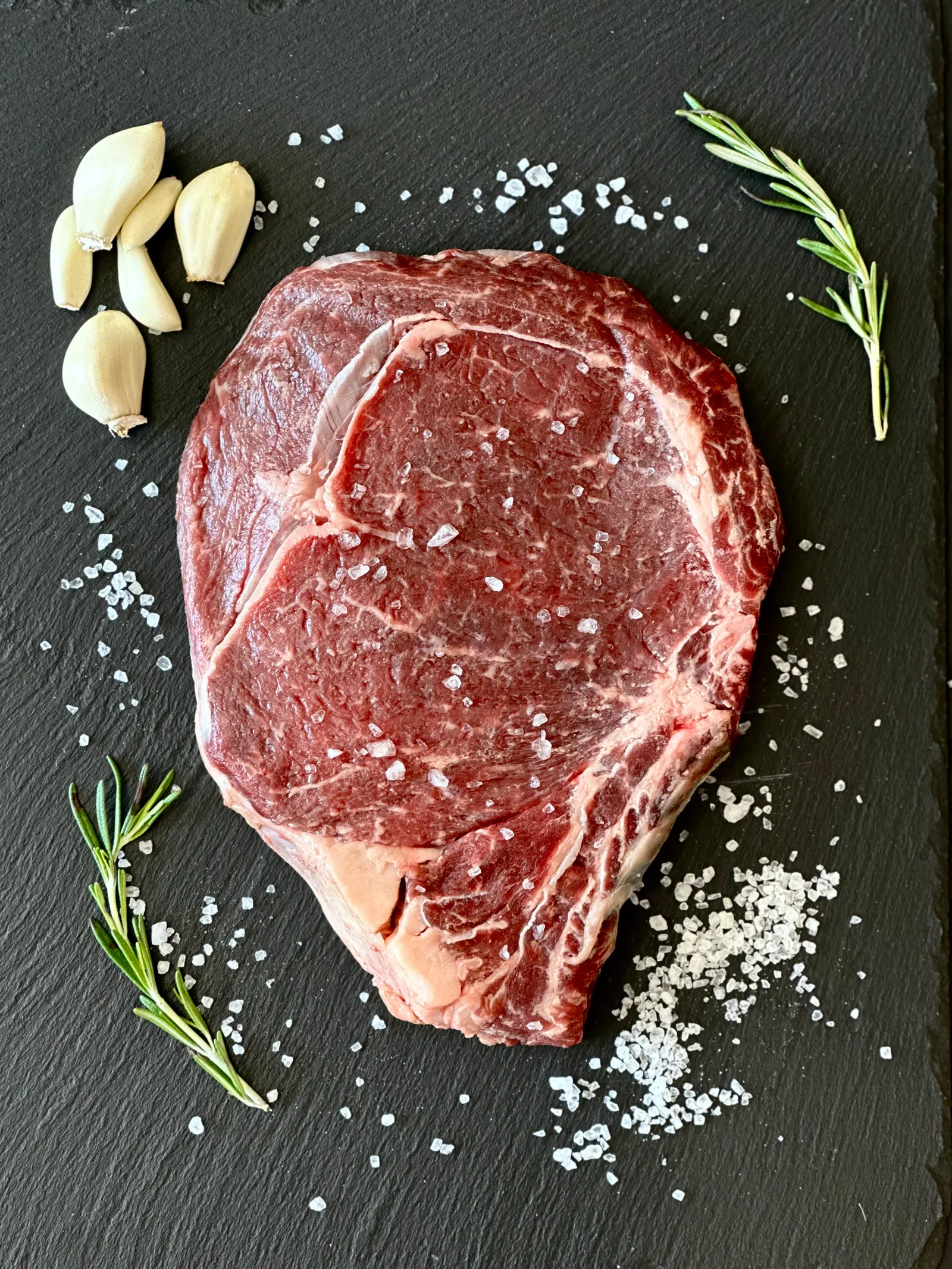
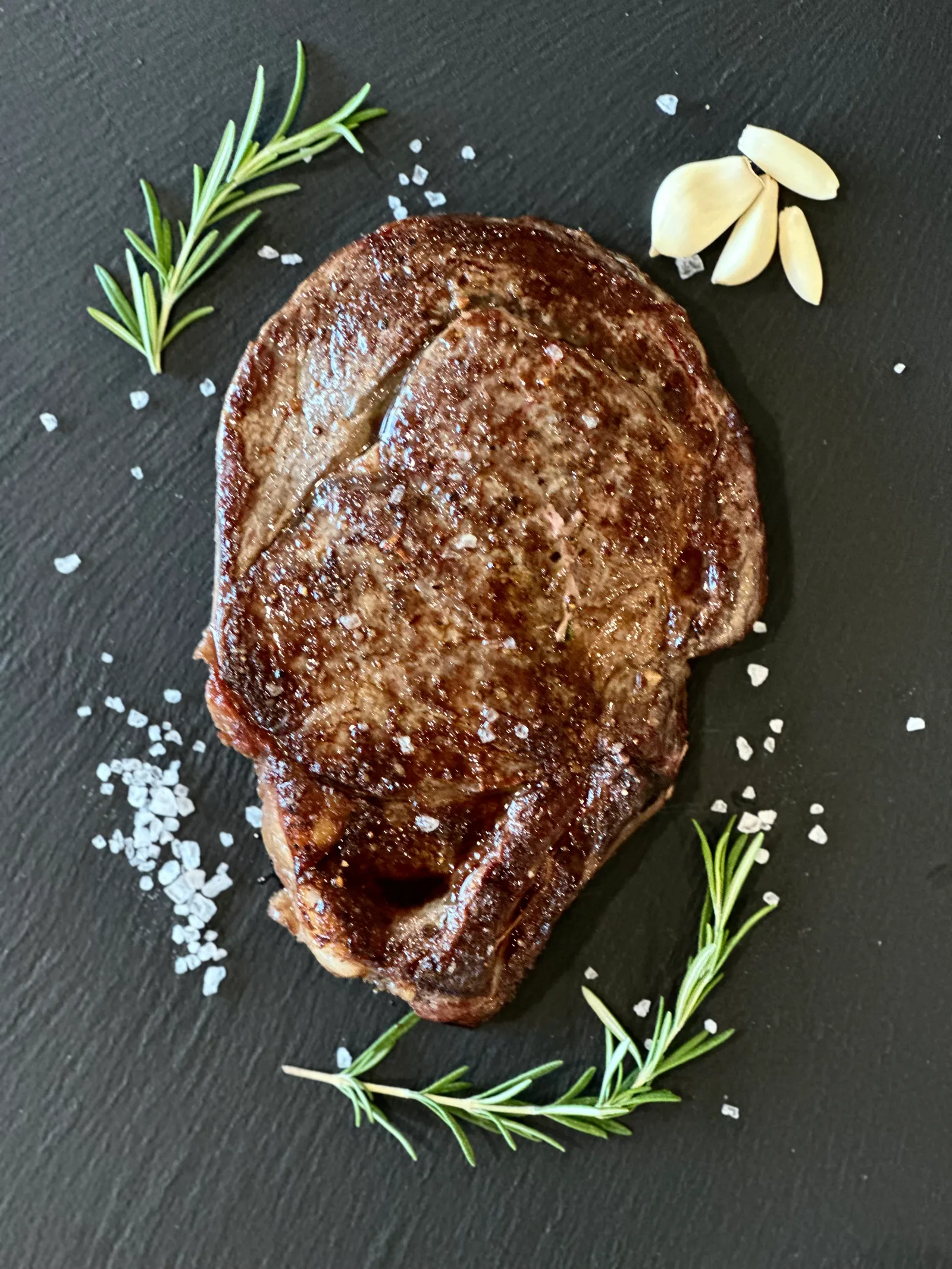
The classic — moderately marbled cap, intense beef flavor. Lean but tender. Hot-sear and rest.
$30.00 each
avg 16 oz
About this cut
The ribeye is cut from the rib primal — ribs 6 through 12 — the section of the steer that does almost no load-bearing work, which is why the muscle stays tender and develops the marbling that makes ribeye famous. Each ribeye carries the spinalis cap on its outside edge, the most flavorful single piece of beef on the animal.
Why Piedmontese matters here
Piedmontese ribeye is naturally leaner than commodity-breed ribeye thanks to a centuries-old myostatin variation — more lean muscle, less render. On the grill that means less flare-up, less fat to manage, and more actual meat per ounce. The intramuscular marbling is finer and silkier rather than chunky, so the cut stays juicy without the heavy fat-mouthfeel of a commodity prime ribeye. Less waste, more steak.
How to cook it
Recommended method
Hot-sear cast iron or grill — get the surface ripping hot, oil the steak (not the pan), about 4 minutes per side (or less) for a 1-inch Piedmontese ribeye. Pull roughly 10°F earlier than you would with an Angus steak: target 120°F off the heat and rest 5 minutes — carryover lands you at medium-rare.
Internal temp targets (pull early — Piedmontese cooks faster)
- Rare: pull at 115°F (rests to 120°F)
- Medium-rare: pull at 120°F (rests to 130°F) — our recommended doneness
- Medium: pull at 130°F
- Well-done: not recommended — Piedmontese is lean enough to dry past medium
Piedmontese cattle are leaner than Angus, so they cook faster. If you've been pulling Angus steaks at 130°F for medium-rare, pull these closer to 120°F. We'll demo this in person at our farmer's-market barbecues this summer.
Want this in your freezer?
Subscribe and we'll let you know the day ribeye hits the catalog.