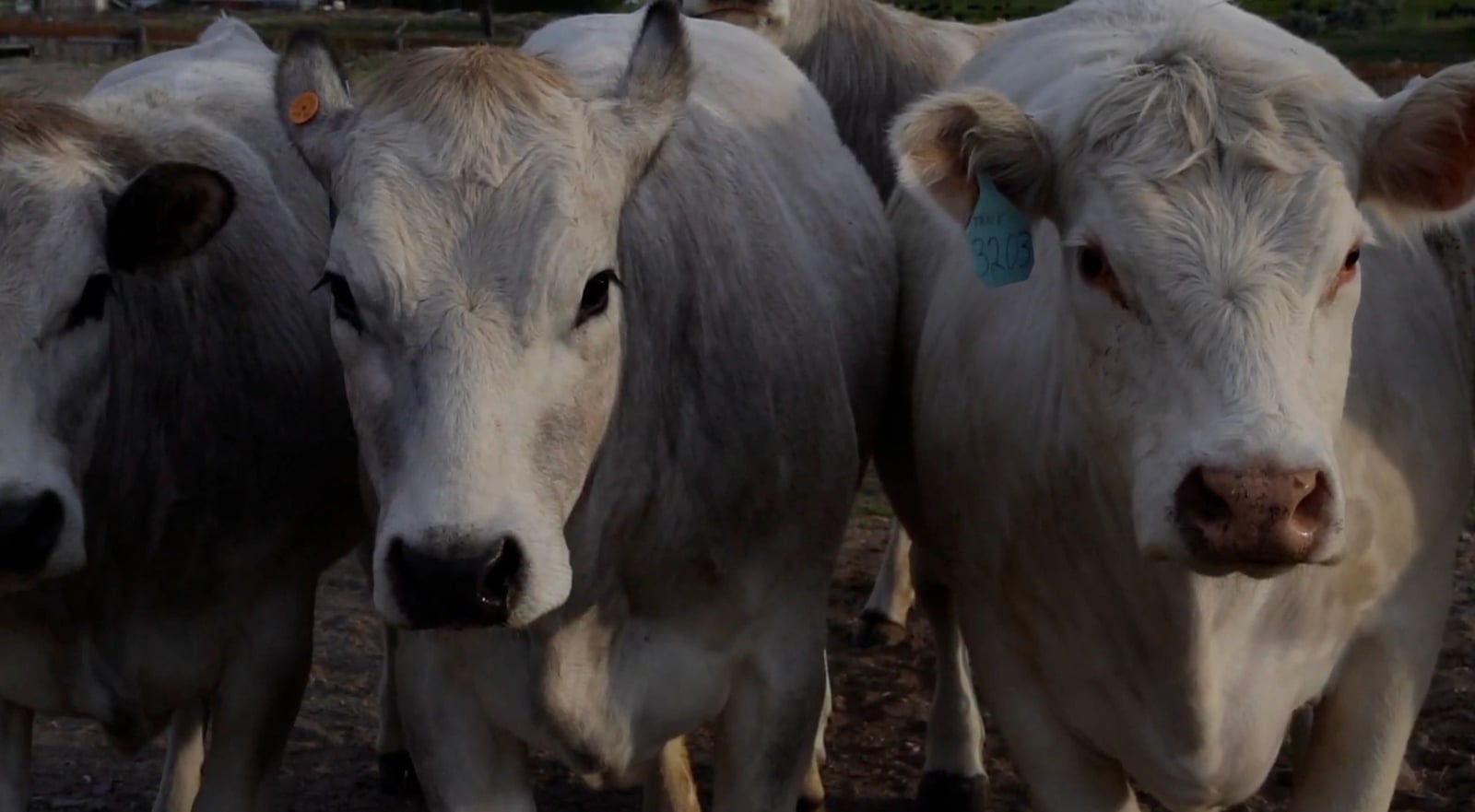
The breed
The Piedmontese breed — rare, lean, lethally tender.
Most American beef is one of two breeds and one of two stories. Piedmontese is a third option — Italian roots, a natural muscle mutation, and a chemistry that produces the leanest, most tender beef the USDA grades.
What makes Piedmontese different
A natural mutation
Piedmontese cattle carry a naturally-occurring mutation in the myostatin gene — the gene that normally tells muscles when to stop growing. Italian researchers identified it in the 1980s, but the breed has carried it for centuries. The result: more lean muscle, finer fiber, less fat. No genetic engineering involved.
The leanest USDA-graded beef
Because the mutation drives growth into muscle and away from intramuscular fat, Piedmontese carries dramatically less fat per pound than Angus or Wagyu. The protein-to-fat ratio rivals skinless chicken breast — but with the iron, B12, and zinc of red meat.
Tender without marbling
Tenderness in beef usually comes from fat (Wagyu) or aging (dry-aged ribeye). Piedmontese is the rare third path: tenderness from genetics itself. The muscle fibers are physically finer — measured shear-force tests show Piedmontese requiring less force to bite through than any other major breed.
Go deeper
Four deep-dives on the science and the comparisons that matter.
Comparison
Piedmontese vs Wagyu
Two breeds, two philosophies. Wagyu builds tenderness through fat; Piedmontese builds it through muscle structure. When each one wins.
Read the comparison →Comparison
Piedmontese vs Angus
Angus is the American pasture-raised default. Piedmontese is leaner, higher protein, and more tender — same pasture-raised claim, different genetics.
Read the comparison →Nutrition
Nutrition science
Protein per ounce, omega-3s, B12, iron, CLA. The numbers behind the "leanest beef" claim and how they compare to Angus and chicken breast.
See the numbers →Science
Myostatin genetics
What myostatin actually does, why a mutation in this one gene changes everything about the meat, and why "double-muscling" isn't what most people think it is.
Read the science →What this means for your cooking
Less fat doesn't mean less flavor — it means a different kind of attention. Piedmontese cuts cook faster and reach doneness sooner than Angus or Wagyu of the same thickness, because there's less fat to render. A ribeye that spends 6 minutes per side on the grill in Angus terms is closer to 4 in Piedmontese.
Pull steaks 5 degrees earlier than you would with conventional beef. Rest them the full ten minutes — there's less fat margin for error. And don't be afraid of medium-rare; the genetic tenderness means even a roast that sees the oven for an hour stays carve-with-a-fork soft.
That's the whole story. A breed bred by Italian genetics, raised on Magic Valley grass, and dropped onto your cutting board with more protein, less fat, and more tenderness than anything else at the butcher's counter.
Sources & further reading
Piedmontese breed claims on this page are drawn from peer-reviewed and breeder-association sources. Specific yield, shear-force, and macro values are flagged for partner verification before final launch.
- North American Piedmontese Association (NAPA) — breed registry, breeder directory, breed-standard references.
- Certified Piedmontese — commercial heritage and the inactive myostatin gene mechanism in plain language.
- ScienceDirect — Piedmontese (overview) — peer-reviewed entry covering breed origin, double-muscling phenotype, carcass composition, and tenderness measurements.
- Wikipedia — Piedmontese cattle — general reference with cross-citations to USDA Meat Animal Research Center comparisons.