How we raise our cattle
Honest beef starts with honest practices.
We don't cut corners on the things that matter — what the animals eat, how they live, and what ends up in your freezer.
Why this page exists
When you buy beef from a grocery cooler, you're trusting a label and a logo. "Natural." "Premium." "Locally raised." Most of those words have no legal meaning, and the cow they belonged to passed through five sets of hands before yours.
We do this differently because we live with these animals every day. The four practices below aren't marketing — they're how we'd raise beef for our own kids, which is exactly what we do. If anything on this page raises a question, ask us. We'll tell you straight.
More background: meet the Piedmontese.
1. Pasture rotation
Our cattle move to fresh pasture on a regular cycle.
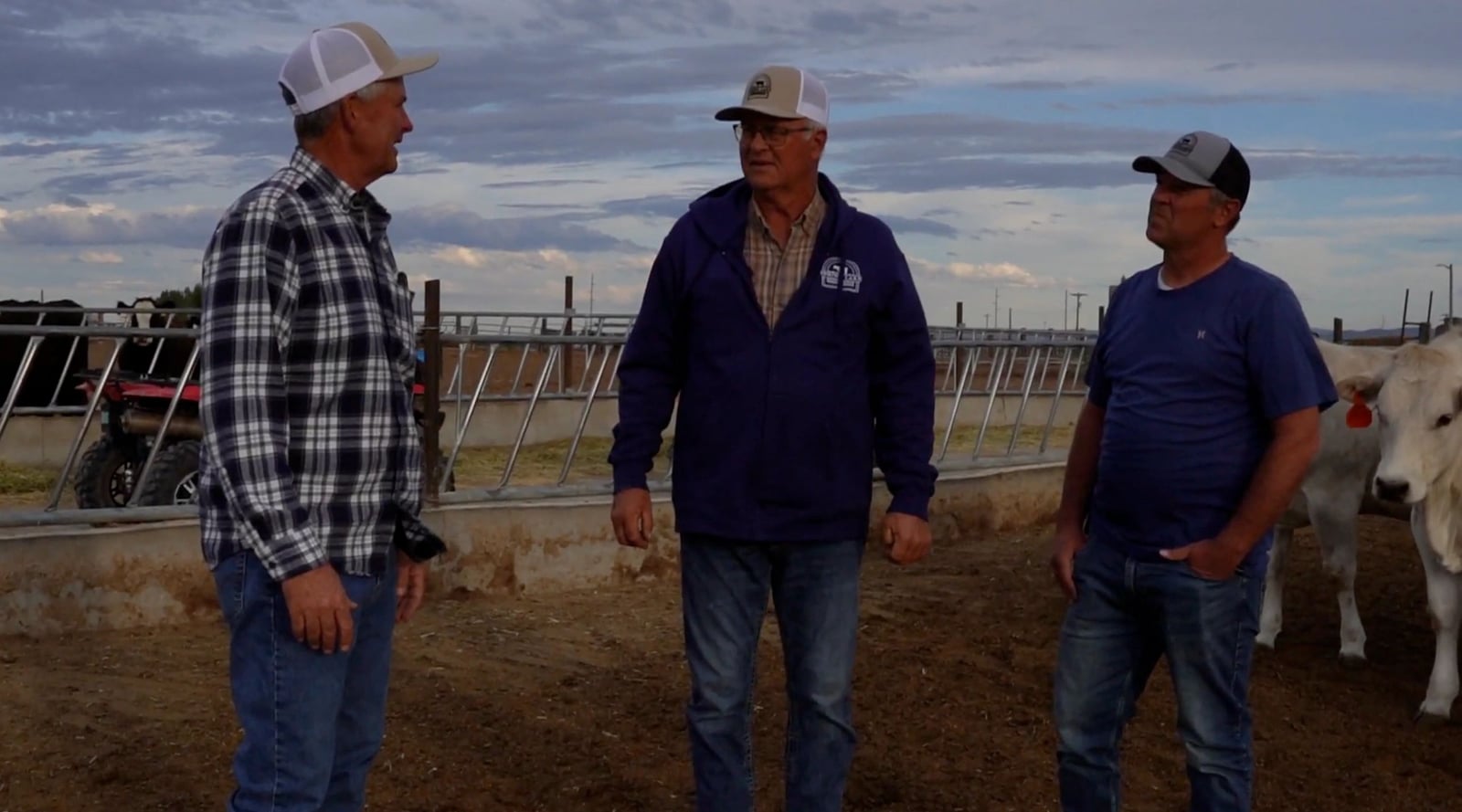
Most commercial cattle spend their last months crowded into a feedlot, standing on dirt, eating grain out of a trough. Our cattle never see that. Instead, the herd rotates through paddocks across our Rupert pasture — a system sometimes called managed grazing or rotational grazing.
Each section gets eaten down a bit, then rested for several weeks while the grass regrows. That rest is the whole point. It keeps the soil alive, keeps parasites from building up where the cattle stand, and gives every paddock a chance to come back stronger than it was. The land feeds the cattle, the cattle fertilize the land, and we mostly stay out of the way.
It's slower than a feedlot. The cattle take longer to finish. But we'd rather raise twenty animals well than two hundred poorly, and the meat tells the difference.
2. Pasture-raised, honestly finished on our own ranch
Open pasture spring through fall. Our own pens in winter. No commercial feedlot, ever.
Most American beef is finished anonymously — animals are shipped to a commercial feedlot where they're crowded onto dirt and grain-pushed for the final months. The cow that started on a small ranch is no longer the cow that becomes your steak. We don't do any of that. Every animal we sell is born, raised, finished, and harvested as part of our family ranch.
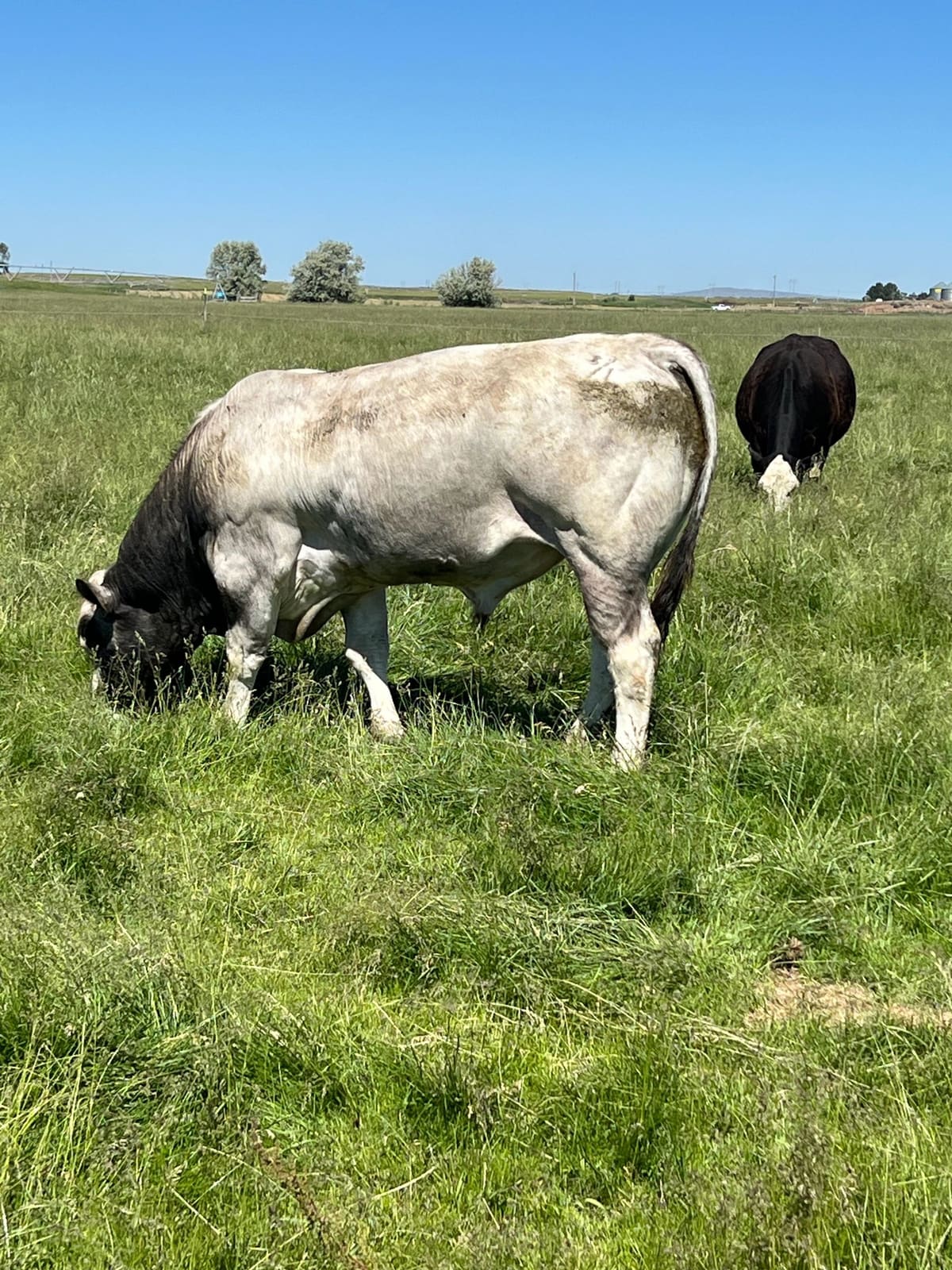
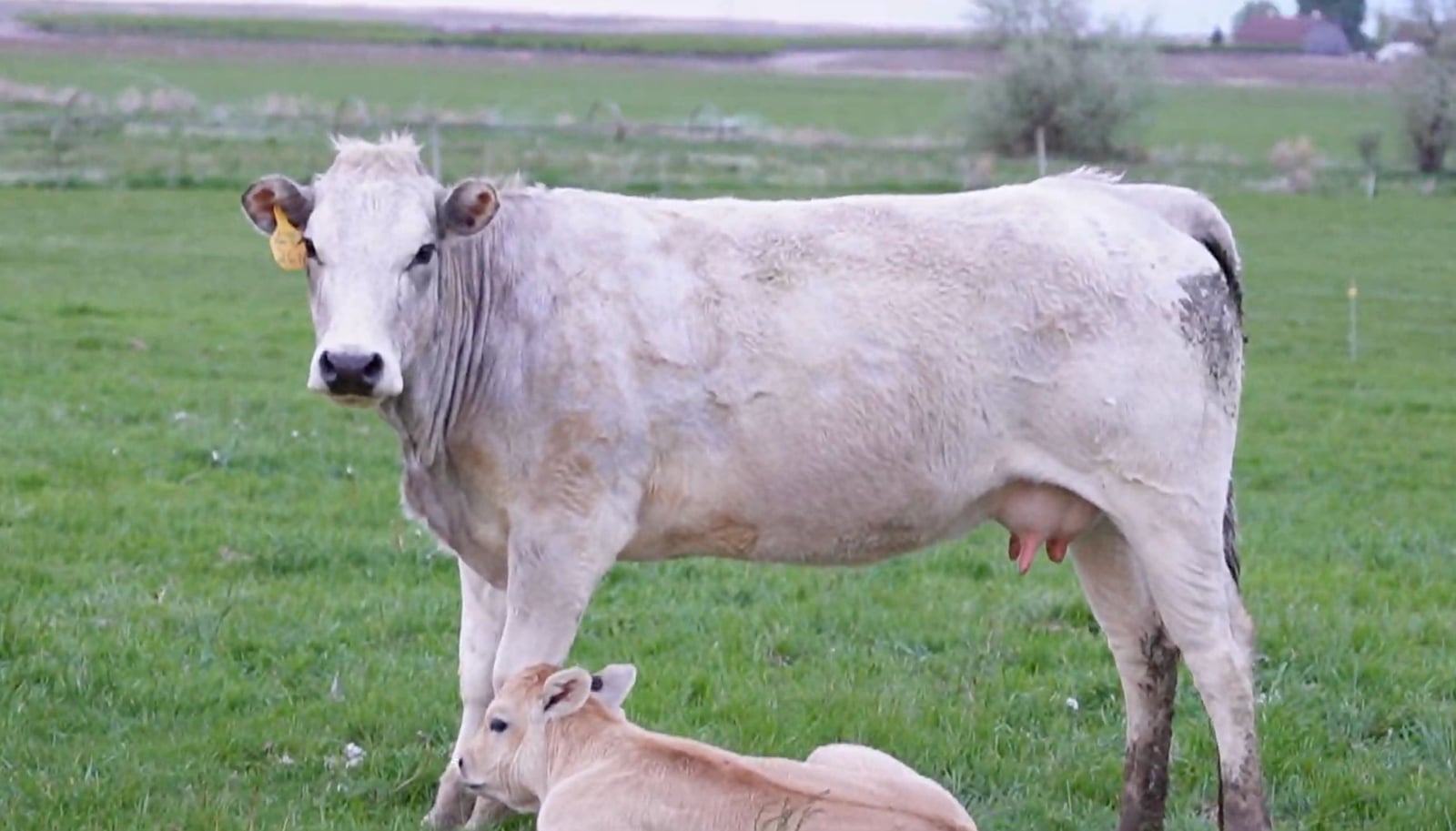
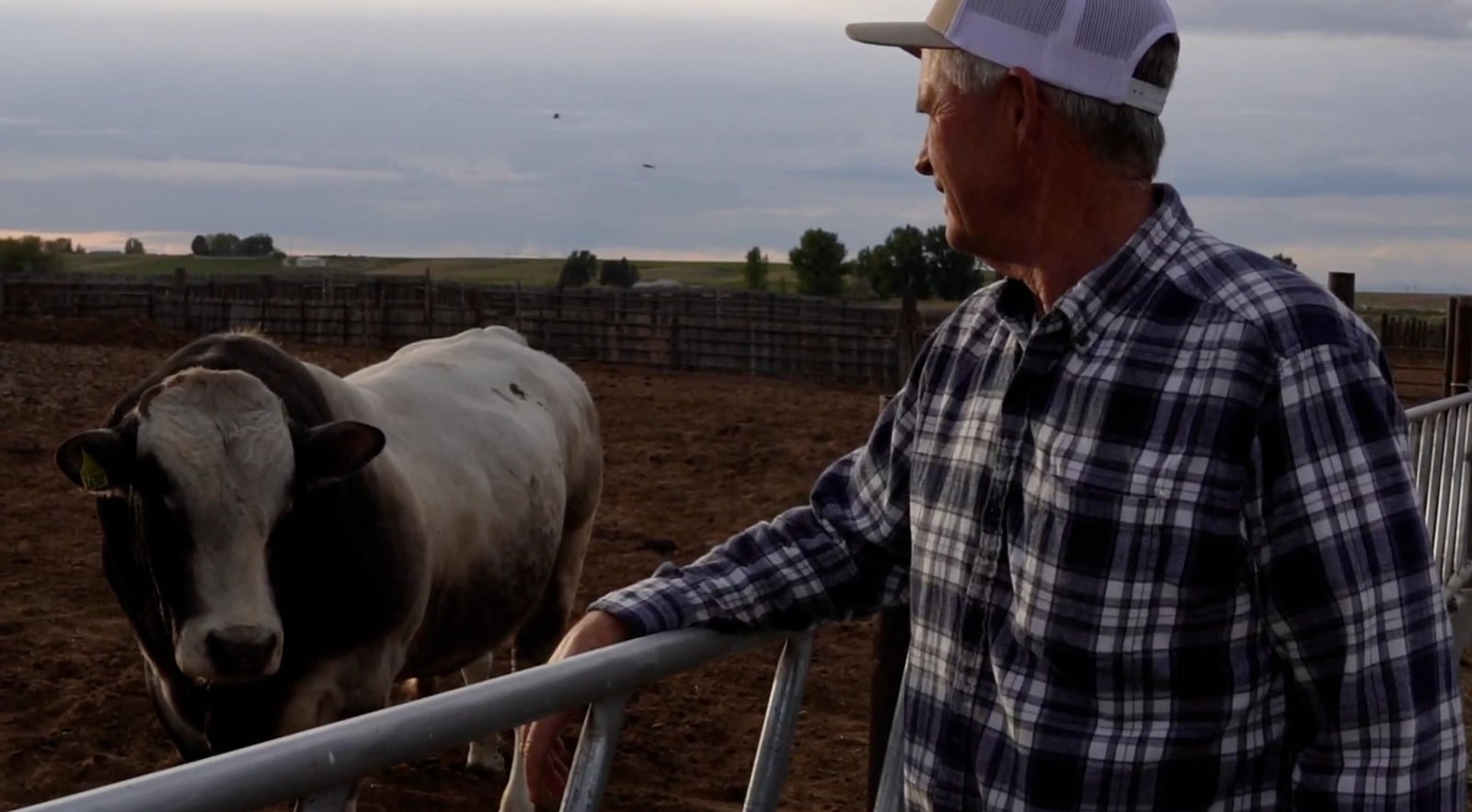
Our Piedmontese spend spring, summer, and fall on open Magic Valley pasture, rotating through paddocks. When the snow takes the pasture out for the winter, they come into our own pens here on the ranch and are fed hay we cut ourselves, plus a measured grain ration to keep them in condition through the cold months. Same cattle, same family, same ground — just inside instead of out, the way working ranches have done it for generations.
Piedmontese also doesn't gain marbling fat the way commodity breeds do, regardless of feed. So the cuts you get from us look genuinely leaner than what you remember from the supermarket — not because of a feeding gimmick, but because the breed simply grows that way.
3. No growth hormones, no routine antibiotics
We use medicine when an animal is sick — never to push weight gain.
Conventional beef leans hard on two tools to hit weight faster and cheaper: synthetic growth hormones implanted behind the ear, and low-dose antibiotics fed daily to the herd. Both are legal. Both work. Both end up in the meat in trace amounts, and both contribute to wider problems we'd rather not be part of.
We don't use either. If an individual animal gets sick — pneumonia, an infection, something that genuinely needs treatment — we'll work with our vet and use the appropriate medication. That's responsible animal care. What we won't do is feed the whole herd a daily dose because it bumps the bottom line.
When we say "no growth hormones, no routine antibiotics," we mean it the way you'd want a neighbor to mean it: literally, every day, every animal.
4. Pasture-to-plate, same family
The people who raised the cow are the people selling you the beef.
Most beef passes through a sale barn, a feedlot, a packer, a distributor, and a grocer before it reaches your kitchen. By the time it's on the shelf, nobody in that chain remembers the animal — and that's by design. Anonymity makes industrial beef possible.
We do all of it ourselves. We raise the cattle. We schedule the harvest with our local USDA-inspected processor. We build the cuts list, label every package, load the coolers, and hand them to you at pickup. If something tastes off or a cut isn't what you expected, you're talking directly to the family that raised the animal — not a customer-service line in another state.
That's a smaller scale than a supermarket can run, and it's the entire point. You get beef with a name on it. We get to keep doing this work the way we want to do it.