Cuts · also called: beef tongue
Lengua
Lengua is the cut that turns Sunday lunch into something memorable. Slow-braised until it falls apart, then sliced thin for tacos or simmered in salsa verde, it has a tenderness most cuts can't touch — and a clean, beefy flavor that takes seasoning beautifully.
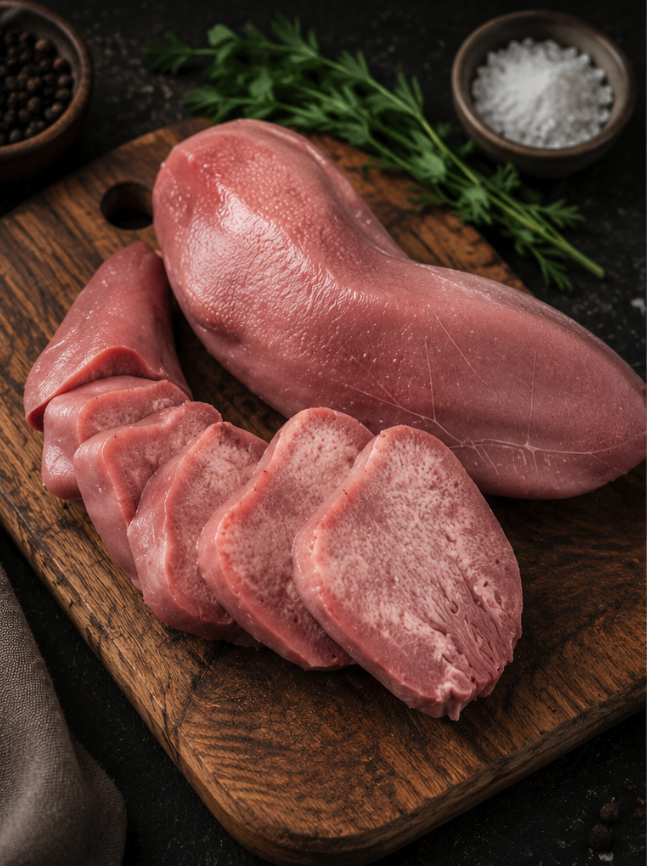
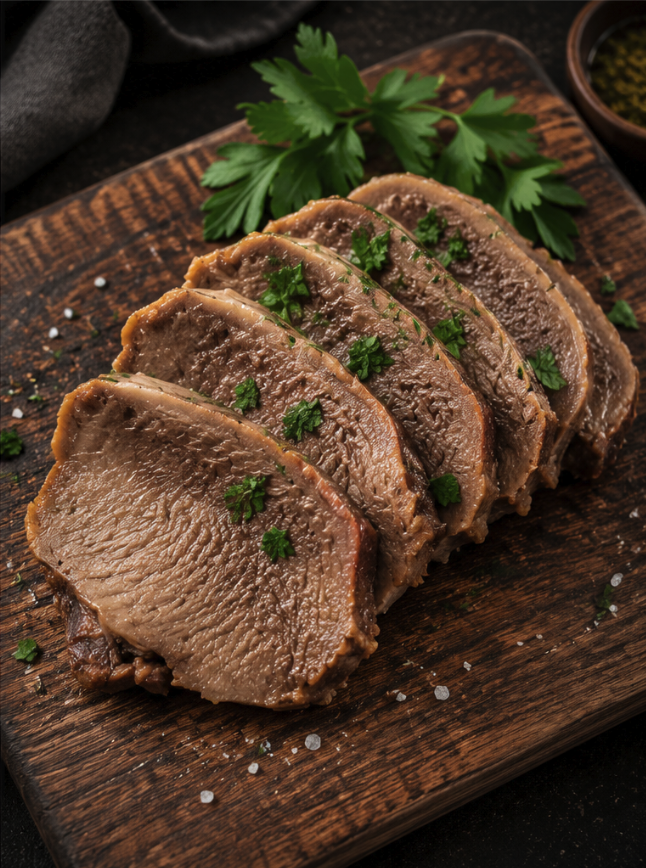
Where it comes from
Lengua is the entire tongue of the steer — a single muscle that does steady work every minute of the animal's life. Because it's a constantly-engaged muscle full of connective tissue, it's the kind of cut that rewards low, slow heat: braise it long enough and the collagen melts into a velvety texture you can't get from any quick-cooked steak.
On a Spring Lake Cattle animal, the tongue is removed whole during processing, vacuum-sealed, and frozen. Each one weighs about 2.5–4 pounds — enough to feed a family of four with leftovers, or to set up a serious taquiza for the weekend.
Why Piedmontese makes the difference
Piedmontese cattle carry a natural mutation in the myostatin gene that produces double-muscling — more lean meat, less intramuscular and external fat than commodity beef. For a cut like lengua that sits in fat-rich head meat, that genetic leanness shows up as a cleaner braise: less skim-off, more concentrated beef flavor in the resulting broth.
Combine that with our family-finished cattle — pasture-raised spring through fall, finished honestly in our own pens on the ranch, no commercial feedlot, no growth implants — and you get a tongue that tastes like an animal that lived a working-cattle life on Magic Valley grass. Customers who grew up eating lengua in Mexico tell us it tastes the way they remember it.
How to cook it
-
Long braise (the classic)
Cover the tongue with water, add a quartered onion, garlic, bay leaves, and a tablespoon of salt. Bring to a low simmer and cook 3–4 hours until a knife slides in with no resistance. Pull it out, peel off the outer skin while still warm — it slips right off — and slice or shred for tacos, tortas, or lengua en salsa verde.
-
Pressure cooker (90 minutes, hands-off)
Same aromatics, 75–90 minutes at high pressure with natural release. Best when you want the same fall-apart texture without babysitting the stove all afternoon. The skin still slips off easily.
-
Slow cooker (overnight)
Set it on low before bed with onion, garlic, and a couple cups of water; in the morning the tongue is ready, the broth is gold, and your kitchen smells like a Sunday morning in Guadalajara.
Recipe inspiration
Tacos de lengua are the most iconic use — sliced thin or chopped fine, served on warm corn tortillas with cilantro, onion, a squeeze of lime, and salsa verde or salsa roja. The broth from the braise is liquid gold; save it for rice, soup, or to reheat the meat without drying it out.
For a one-pot Sunday dinner, lengua en salsa verde simmers the sliced meat in a tomatillo-jalapeño-cilantro sauce until it absorbs every bit of flavor — serve with rice and warm tortillas. Lengua en salsa roja (with dried guajillos and tomatoes) is the cold-weather version. Both freeze well in batch.