Cuts · also called: beef cheek
Cachete
Cachete is the secret weapon of taco trucks across northern Mexico — and once you cook a Piedmontese cheek low and slow, you understand why. Few cuts have this much connective tissue, and few cuts reward a long braise with the same buttery, almost-confit texture.
Where it comes from
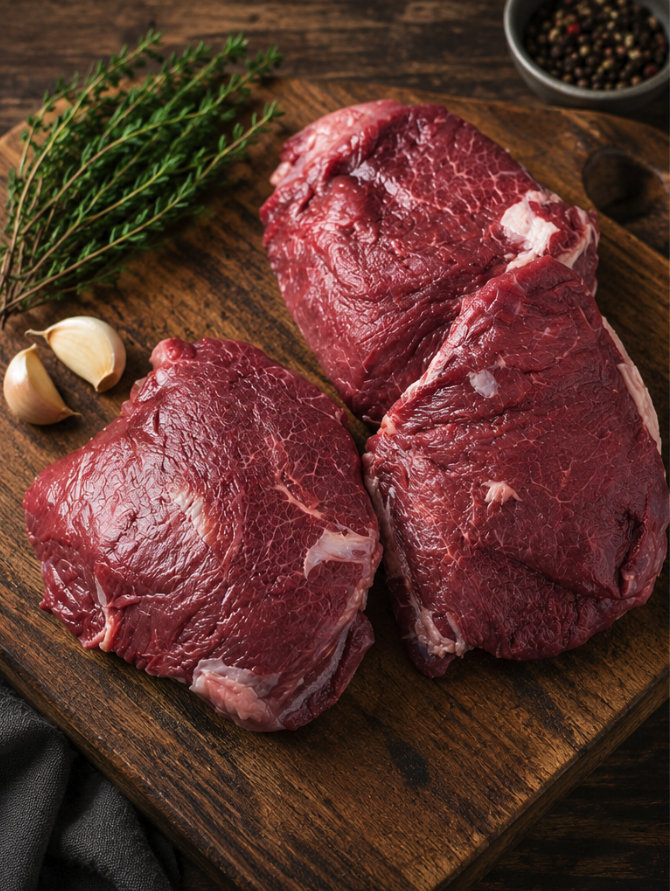
Cachete is the cheek muscle of the steer — a hard-working face muscle that chews grass for hours every day. All that motion builds dense connective tissue and collagen, which is exactly what you want for a long braise: the collagen melts into gelatin, the meat shreds with a fork, and the resulting texture is unlike any quick-cooked cut.
We trim and vacuum-seal each cheek individually. They average 1–1.5 pounds each — perfect for two pounds of taco-ready meat from a single package, or one solid pot of barbacoa.
Why Piedmontese makes the difference
Beef cheek is a high-collagen, lower-fat cut to begin with — but the breed still matters. Commodity-breed cheeks tend to taste muddied because of feedlot diet and confined finishing; Piedmontese cheeks from pasture-raised animals have a clean, deep beef flavor that shines once braised.
The myostatin lean gene means even less external fat to trim before cooking, and a tighter braise that doesn't separate into oil and meat. Customers who've had cachete tacos in Monterrey or Saltillo tell us ours stand up.
How to cook it
-
Slow braise (3–4 hours)
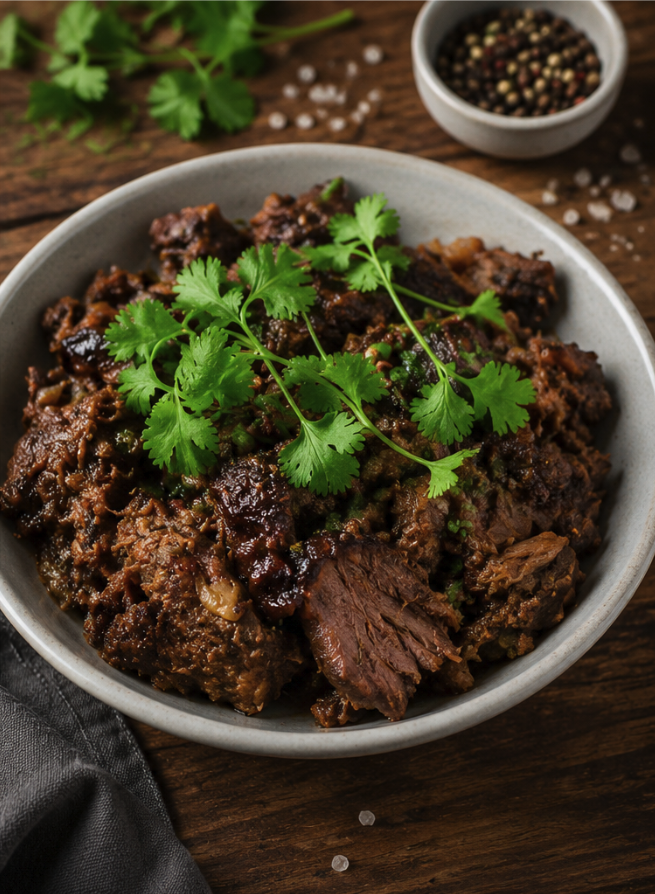
Season the cheeks generously with salt and a little chile powder, then sear in a heavy pot until browned on all sides. Add diced onion, garlic, a chipotle in adobo, a cup of beef broth, and a splash of orange juice. Cover and simmer on low for 3–4 hours, or move to a 300°F oven, until the cheeks shred easily with two forks.
-
Pressure cooker (90 minutes)
Sear first, then pressure-cook for 60–75 minutes at high pressure with the same liquid. Natural release for 15 minutes. Same texture, fraction of the time.
-
Barbacoa (steamed in maguey or banana leaves)
For traditional barbacoa-style cachete, season the cheeks with a paste of toasted guajillo, garlic, vinegar, and spices, then wrap in banana leaves (or a parchment + foil double-wrap) and bake at 300°F for 4–5 hours. The meat steams in its own juices and emerges shreddable.
Recipe inspiration
Tacos de cachete are the obvious move — shredded slow-braised cheek on warm corn tortillas, with chopped onion, cilantro, lime, and a salsa verde or a salsa de chile de árbol. The braising liquid reduces into a rich consomé you can sip alongside or drizzle over the tacos.
Cachete en barbacoa is the weekend project — same cheek, but seasoned with a guajillo-ancho paste and slow-roasted in banana leaves until it shreds into Sunday-morning tacos. Serve with onion, cilantro, lime, and a small bowl of the consomé.