Cuts · also called: oxtail
Rabo
Rabo is the cut that built broth — the bone-in tail of the steer, cross-cut into rounds, packed with collagen, and built for a long, slow simmer that turns plain water into something that gels in the fridge. One pot of rabo guisado feeds a family for two days and tastes better the second.
Where it comes from
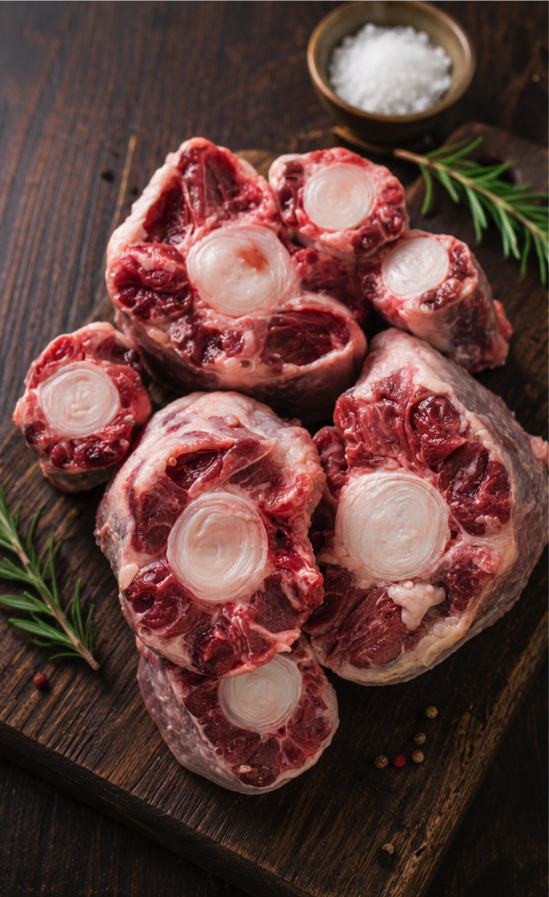
Rabo is the tail of the steer, cross-cut into 1.5–2 inch sections. Each section has a vertebra in the middle surrounded by gelatin-rich connective tissue and lean meat — the perfect ratio for braised dishes where you want the broth to thicken naturally and the meat to fall off the bone.
We typically pack 1.5–2 pounds per package, vacuum-sealed straight from the cutting room. One package is enough for a hearty caldo or a pot of rabo guisado for a family of four, with leftovers.
Why Piedmontese makes the difference
Tail is one of the cuts where commodity beef and ranch-direct beef diverge most visibly. Feedlot cattle produce tails that render an oily, slightly off-flavored broth; pasture-finished animals like ours produce tails that yield clear, deeply beefy broth — the kind your abuela would taste once and nod at.
The Piedmontese myostatin lean gene gives us tails with a higher meat-to-fat ratio than commodity oxtail. You get more meat to shred at the end of the braise, and less fat to skim off the top of the pot.
How to cook it
-
Caldo de rabo (3–4 hours)
Brown the rabo pieces in a heavy pot, then cover with water. Add salt, half an onion, garlic, and a bay leaf. Simmer 2.5–3 hours, skimming foam, until the meat pulls easily from the bone. Add carrots, potato, corn on the cob, and chayote in the last 30 minutes. Serve with rice, lime, cilantro, and tortillas.
-
Rabo guisado (3 hours, tomato-chile sauce)
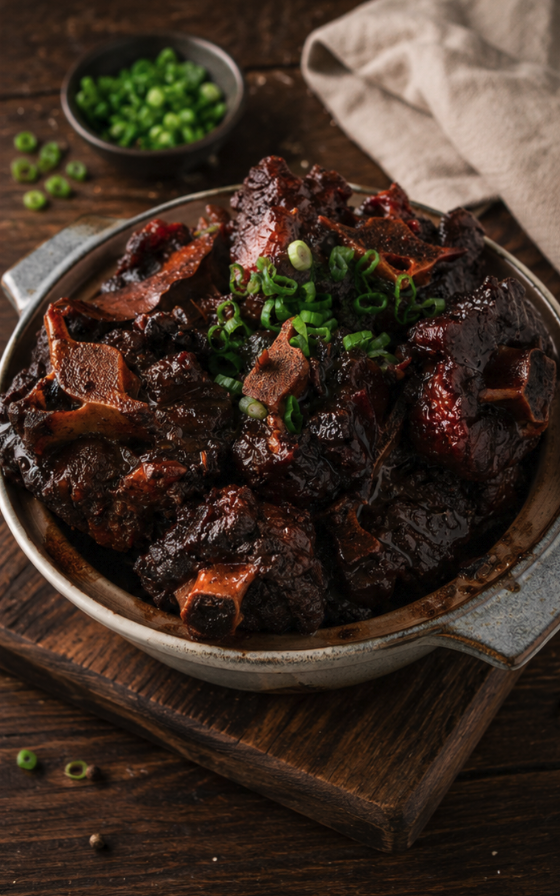
Brown the pieces, then simmer in a sauce of pureed tomato, garlic, onion, ancho or guajillo chile, and a touch of vinegar. Cook covered on low 2.5–3 hours until tender. Serve over rice with refried beans and warm tortillas.
-
Pressure cooker (90 minutes)
For weeknight rabo, pressure-cook the browned pieces with aromatics for 70–90 minutes at high pressure with natural release. The texture is the same as a 3-hour stovetop braise; the broth body is slightly thinner.
Recipe inspiration
Caldo de rabo is the cold-weather Sunday — rabo simmered with vegetables until the broth gels in the fridge and the meat shreds off the bone with no effort. The bones add backbone the way no boneless cut can; the gelatin gives the broth a body that sticks to your spoon.
Rabo guisado is the everyday version — pieces of rabo simmered in a tomato-chile sauce until the meat is fall-apart and the sauce is thick. Spoon over rice, scoop into tortillas, or eat straight from the bowl with bread for sopping.