Cuts · also called: beef liver
Hígado
Hígado is the cut your grandmother served you whether you wanted it or not — and a generation later, you understand. Quick-cooked over high heat with onions and a squeeze of lime, it's among the most nutrient-dense foods on the plate, and on a Piedmontese animal it has a mild, clean flavor that converts skeptics.
Where it comes from
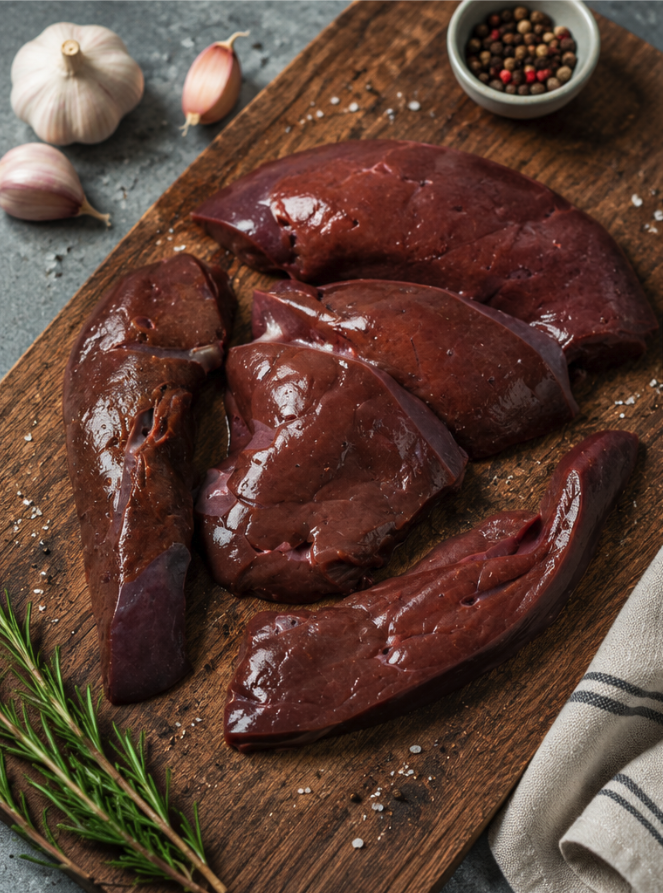
Hígado is the liver of the steer — a single large organ that handles every nutrient the animal eats. It's rich in iron, vitamin A, B12, copper, and folate at concentrations no other cut comes close to. Texture-wise it's soft and dense; flavor-wise it's strongly mineral, which is why pairing it with onions, garlic, and acid is the universal preparation.
We slice the liver into ½-inch steaks at the cutting room and vacuum-seal them in 1-pound packs. Frozen flat, they thaw in the fridge in a few hours and are ready to sear. The trim is already done — you don't have to peel any membrane at home.
Why Piedmontese makes the difference
Liver, more than any other cut, reflects what the animal ate. Feedlot cattle on grain-heavy rations produce livers that taste sharp, mineral-overload, and slightly off — the strong-liver-flavor most Americans associate with the cut. Pasture-finished animals on diverse forage produce livers that are noticeably milder, cleaner, and easier to enjoy even for people who think they don't like liver.
Combine that with no growth implants and no routine antibiotics, and you have a liver you can serve to anyone — including the nutrition-conscious customer who wants the iron and B12 hit without the feedlot baggage.
How to cook it
-
Hígado encebollado (15 minutes, the classic)
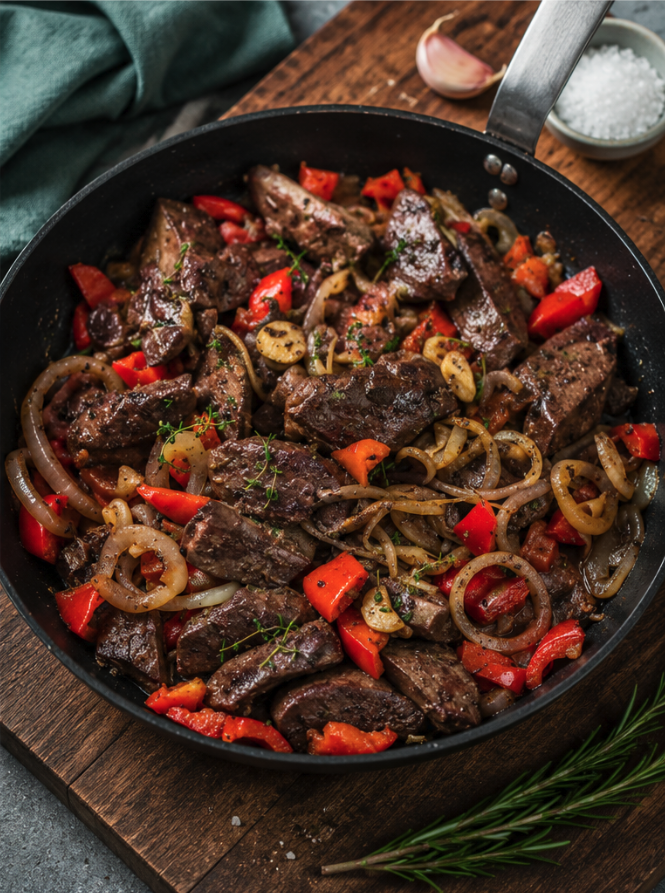
Pat the liver slices very dry, season with salt and a little flour. Sauté two thinly-sliced onions in butter or oil until deeply caramelized — 15 minutes — then push to the side of the pan. Sear the liver 90 seconds per side over medium-high heat (you want pink in the middle; overcooking makes it grainy). Add the onions back, a splash of vinegar or lime juice, and serve immediately with rice and tortillas.
-
Hígado a la mexicana (with chile and tomato)
Sauté onion, garlic, jalapeño, and tomato until soft. Add the liver, sliced into strips, and cook just 2–3 minutes — only until it loses raw color. Salt, pepper, and a squeeze of lime. Serve with rice and beans.
-
Soak in milk first (optional, for stronger preferences)
For people who find any liver too strong, soak the slices in milk for 30 minutes before cooking. Drain, pat dry, and proceed. The milk pulls out some of the iron-mineral edge without killing the flavor entirely. Most Piedmontese liver doesn't need this step, but the option is there.
Recipe inspiration
Hígado encebollado is the universal preparation across Mexican households — liver seared quickly, smothered in slow-caramelized onions, finished with vinegar or lime. Served with rice, refried beans, and warm tortillas, it's a complete plate. Cook the liver fast: pink in the middle, never gray.
Hígado a la mexicana adds chile and tomato to the same base — a quicker, brighter version that suits a weeknight better than the long onion preparation. Same rule: cook the liver fast, just until it loses its raw color, and pull it before it goes grainy.